Strength Calculation for the Spindle Pulley
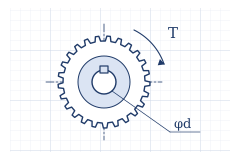
Checking whether it's okay to make the 25T motor-side pulley out of aluminum, based on peak torque. Conclusion: Strength is sufficient. Watch out for key play and tooth wear. This is a preliminary calculation, unverified on the actual machine.
Conditions
| Item | Value | Basis |
|---|---|---|
| Peak torque T | 11.13 N·m | A6-RS1000 |
| Rated torque | 3.18 N·m | A6-RS1000 |
| Shaft diameter d | 19 mm | A6-RS1000 |
| Key | 6×6 (motor side is B6×6×25) | A6 manual |
| Bore-side keyway depth t2 | 2.8 mm | Standard dimensions for 6×6 (unverified: measure on the actual part) |
| Engaged key length L | 20 mm | Assuming a pulley width of 20 |
| Pulley | 25T, 5 mm pitch | Plan for a 2:1 reduction ratio |
| Center distance | 200 mm | Assumed. Used only for calculating the number of engaged teeth |
1. Keyway Surface Pressure
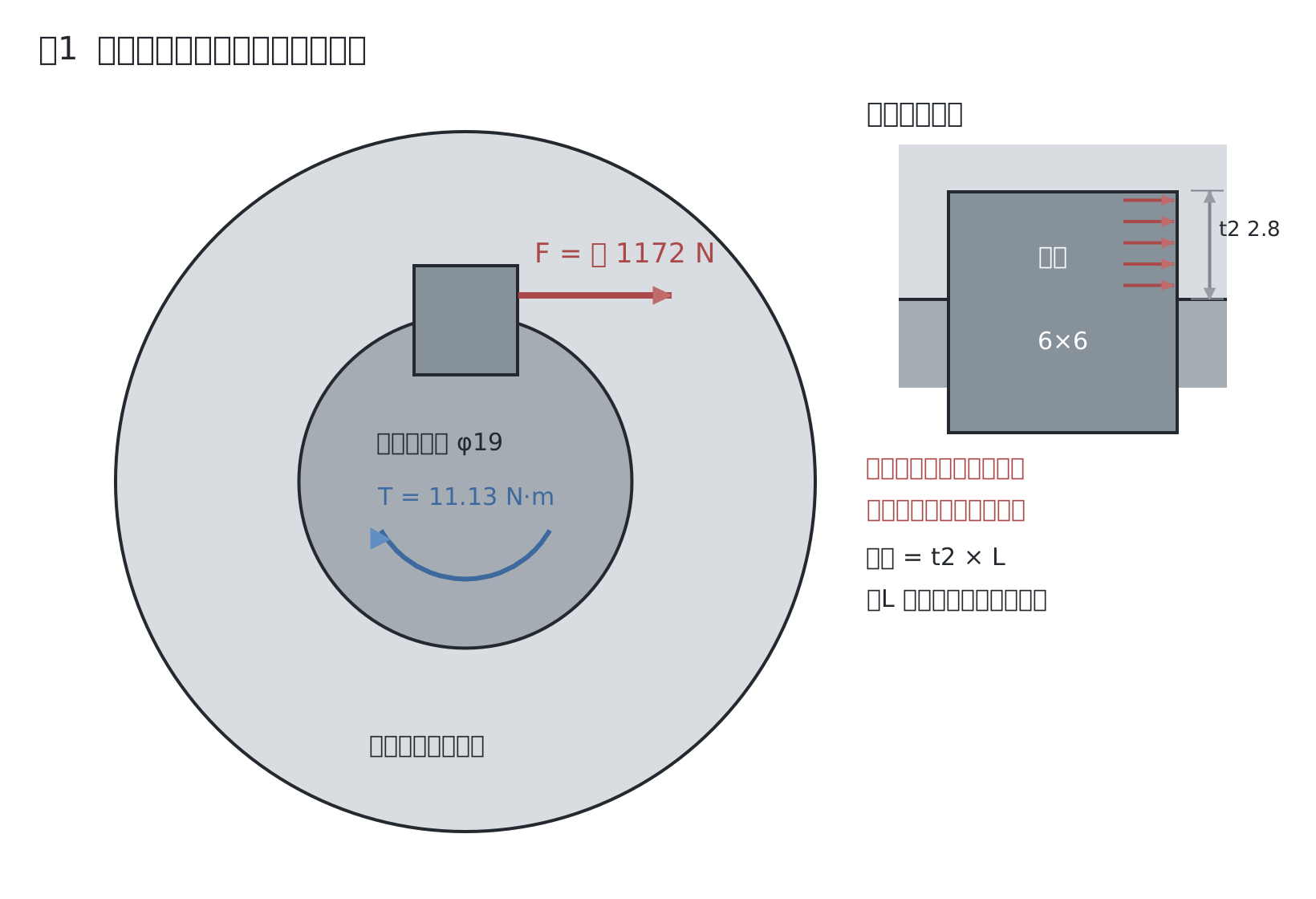
- Force on key: F = T ÷ (d ÷ 2) = 11130 N·mm ÷ 9.5 mm = approx. 1172 N
- Area bearing the load in aluminum: A = t2 × L = 2.8 × 20 = 56 mm²
- Surface pressure: p = F ÷ A = 1172 ÷ 56 = approx. 21 MPa
Since the force was calculated at the shaft surface, the result comes out slightly on the high side.
| Case | F | p |
|---|---|---|
| Rated 3.18 N·m, L 20 | approx. 335 N | approx. 6 MPa |
| Peak 11.13 N·m, L 20 | approx. 1172 N | approx. 21 MPa |
| Peak 11.13 N·m, width 15 and L 15 | approx. 1172 N | approx. 28 MPa |
Since the exact material is unknown, we assume a conservative yield strength of 100 MPa for aluminum. The safety factor is 100 ÷ 21 = approx. 4.8. For 6061-T6 grade (approx. 240 MPa or higher, typical value), it would be about 11.
2. Shear Stress on the Key Itself
τ = F ÷ (key width × L) = 1172 ÷ (6 × 20) = approx. 10 MPa. Plenty small enough for a steel key.
3. Belt and Tooth Force
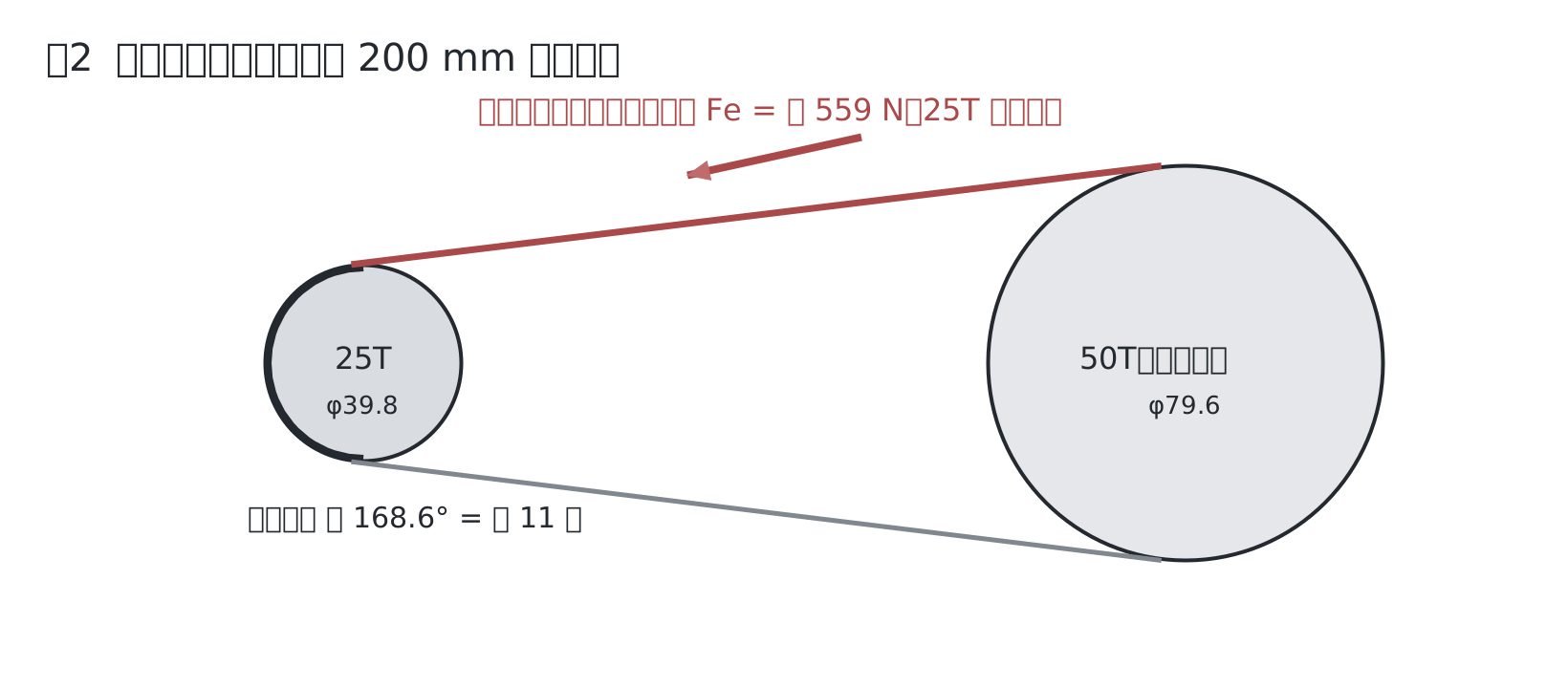
- Pitch diameter: 25 × 5 ÷ π = 39.8 mm; for 50T, it is 79.6 mm
- Force difference between tight and slack sides: Fe = T ÷ (39.8 ÷ 2) = 11130 ÷ 19.9 = approx. 559 N
- Wrap angle: 180° − 2 × asin((79.6 − 39.8) ÷ (2 × 200)) = approx. 168.6°
- Number of engaged teeth: 25 × 168.6 ÷ 360 = 11.7, so approx. 11 teeth
- If shared equally, per tooth: 559 ÷ 11 = approx. 51 N
- Even assuming it's unevenly carried by just 3 teeth: 559 ÷ 3 = approx. 186 N. With tooth height 2 mm (typical value, unverified) × width 20 mm giving 40 mm², that is approx. 4.7 MPa
Wear from chips and dust will become an issue before tooth strength does. The allowable force of the belt itself will be checked in the catalog once the width and brand are decided.
Conclusions and Measures
- The surface pressure on the keyway and teeth is small compared to the strength of aluminum.
- Since rigid tapping repeatedly alternates between forward and reverse, any play in the key will hammer and widen the keyway. Play also causes errors in tap synchronization and positioning. Check the fit and clamp the key with a set screw.
- Install a cover around the belt.
- The motor side runs at high speeds up to 6000 rpm, and balance on cheap parts is unknown. Check for vibration during test runs.
- If play or wear develops, switch to steel. It only requires replacing the pulley.
QR code for this page
https://robo100.jp/en/000007
No comments yet.